Tag: stock market

  • The National Stock Exchange (NSE)

    The National Stock Exchange (NSE)

    The National Stock Exchange of India

    The National Stock Exchange (NSE) is the largest stock exchange in India, with a market capitalization of over $2.7 trillion USD.

    It was founded in 1992 and has quickly become one of the most important players in the Indian economy. Here is a closer look at the history, current status, and role of the NSE in the global economy.

    History

    The NSE was founded in 1992 as a response to the lack of transparency and efficiency in the Indian stock market at the time. The exchange was established with the goal of creating a more efficient and modern stock market, using cutting-edge technology to streamline trading and reduce costs for investors. The NSE introduced electronic trading in 1994, which revolutionized the Indian stock market and made it accessible to a wider range of investors.

    Current Status

    Today, the NSE is the largest stock exchange in India, with more than 2,000 listed companies and over 300 million registered investors.

    It has a wide range of listings covering many different sectors, including technology, finance, consumer goods, and more. The NSE is known for its innovative and efficient trading platform, which has helped to drive growth in the Indian economy and attract foreign investors.

    National Stock Exchange: The Nifty 50

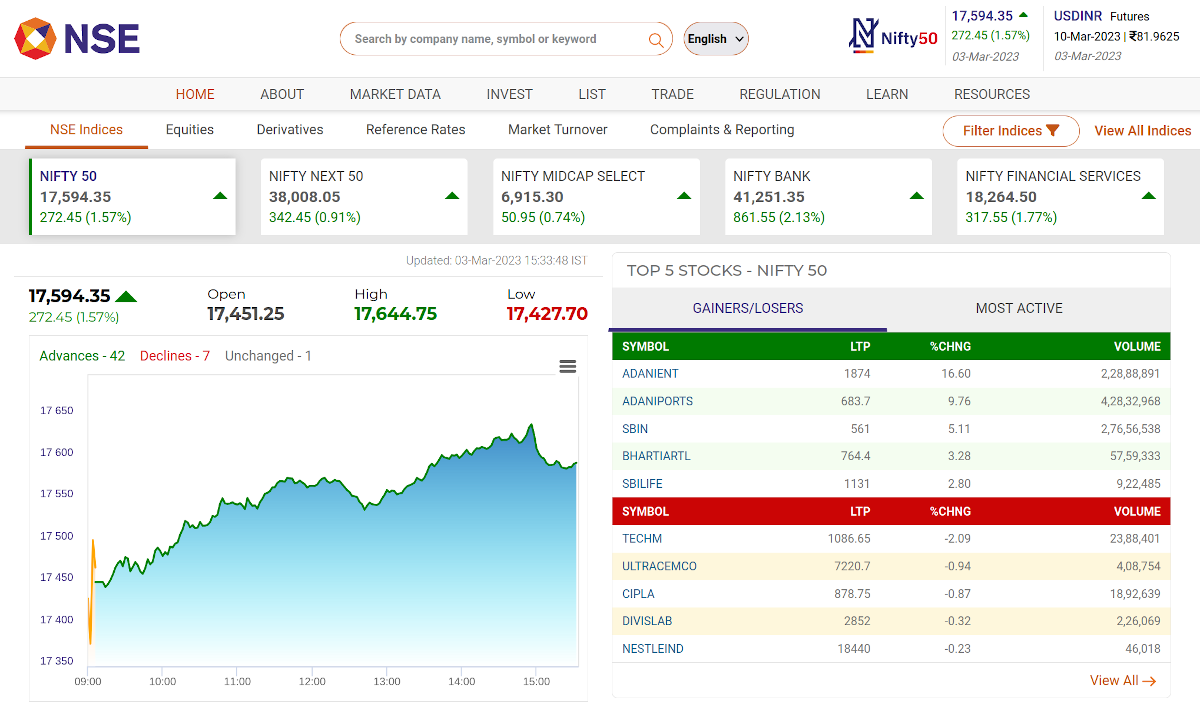
    The Nifty 50 on the National Stock Exchange (NSE) of India is a stock market index that tracks the performance of the top 50 companies listed on the NSE.

    These companies are selected based on various factors such as market capitalization, liquidity, and financial performance. The Nifty 50 index is widely used as a benchmark for the Indian stock market and is considered a key indicator of the overall health of the Indian economy. The Nifty 50 index is also used by investors as a tool for building diversified portfolios and making investment decisions. Overall, the Nifty 50 on NSE India plays an important role in the Indian stock market and is closely watched by investors, analysts, and market participants.

    Role in the Global Economy

    The NSE plays a significant role in the global economy, both as a leading stock exchange and as a major player in the Indian economy.

    India is the world’s sixth-largest economy, and the NSE is a critical component of the country’s financial system. It provides a platform for investors to buy and sell shares in Indian companies, which helps to fuel economic growth and create jobs.

    In recent years, the NSE has become increasingly important on the global stage, as foreign investors have started to take notice of the opportunities offered by the Indian market.

    The exchange has attracted a growing number of foreign investors, who are drawn by the country’s high growth rates, large population, and rapidly expanding middle class. As a result, the NSE has become an important destination for investors looking to diversify their portfolios and gain exposure to the Indian economy.

    Overall, the NSE is a critical player in the global economy, and an important destination for investors seeking exposure to the Indian market. Its innovative trading platform, wide range of listings, and significant role in the Indian economy make it an attractive option for investors looking to diversify their portfolios and tap into the potential of one of the world’s fastest-growing economies.

    Popular Stocks and Sectors on National Stock Exchange (NSE)

    The National Stock Exchange (NSE) of India has a wide range of listings covering many different sectors, including technology, finance, consumer goods, energy, and more.
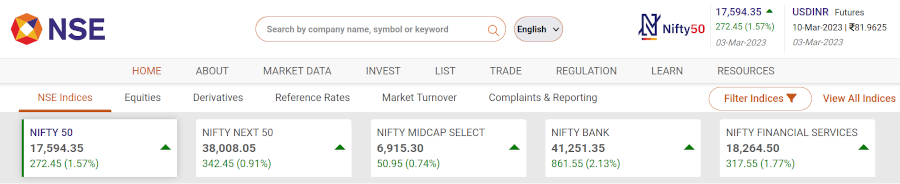
    Here is a closer look at some of the most popular sectors and stocks on the exchange.

    Technology Sector

    The technology sector is one of the most significant on the NSE, with companies like Infosys, Wipro, and Tata Consultancy Services among the largest and most popular listings. These companies are leading providers of IT services, software development, and business process outsourcing, and are known for their cutting-edge technology and innovation.

    Finance Sector

    The finance sector is also significant on the NSE, with many of India’s largest banks and financial institutions listed on the exchange. HDFC Bank and ICICI Bank are among the most popular listings in this sector, offering a wide range of financial products and services to individuals and businesses in India.

    Consumer Goods Sector

    The consumer goods sector is growing in importance on the NSE, with companies like Hindustan Unilever and Nestle India performing well in recent years. These companies are known for their popular consumer brands, including personal care products, food and beverages, and home care products.

    Energy Sector

    The energy sector is also significant on the NSE, with companies like Reliance Industries and Indian Oil Corporation among the largest listings. These companies are major players in the oil and gas industry in India, with a focus on exploration, production, refining, and marketing of petroleum products.

    Infrastructure Sector

    The infrastructure sector is another significant sector on the NSE, with companies like Larsen & Toubro and Adani Ports and Special Economic Zone among the largest listings. These companies are involved in a wide range of infrastructure projects, including construction, engineering, and port operations.

    Overall, the NSE offers a diverse range of listings across many different sectors, providing investors with a wide range of investment opportunities. The exchange is known for its innovative trading platform, which has helped to drive growth in the Indian economy and attract foreign investors. As India continues to grow and develop, the NSE is likely to remain an important destination for investors seeking exposure to one of the world’s fastest-growing economies.

  • The Hong Kong Stock Exchange (HKEX)

    The Top 10 Stock Exchanges in the World: The Hong Kong Stock Exchange (HKEX)

    The Hong Kong Stock Exchange (HKEX) is one of the top 10 stock exchanges in the world, and the third-largest in Asia after the Tokyo Stock Exchange and the Shanghai Stock Exchange. Founded in 1891, it has a long history of serving as a major financial hub in the region.

    Hong Kong Stock Exchange and the Global Economy

    The HKEX has played a significant role in the global economy, especially in the Asia-Pacific region. Its strategic location and proximity to China have made it an important gateway for foreign investors looking to access the Chinese market. As a result, it has attracted many multinational companies to list on its exchange, including Alibaba Group, Tencent, and China Mobile.

    The HKEX has also been at the forefront of innovation, introducing various initiatives to attract new listings and trading activities. In 2018, it launched a new platform for biotech companies to raise capital, allowing them to list without having to meet profitability requirements. This move has helped to cement its position as a leading destination for biotech and other high-growth companies.

    Hong Kong Stock Exchange Market Capitalization

    In terms of market capitalization, the HKEX is the fifth-largest in the world, with a total market capitalization of over $5 trillion as of February 2023. It has over 2,400 listed companies, including both local and international firms. The exchange is also home to a diverse range of industries, including finance, technology, healthcare, and real estate.

    HKEX Challenges

    The HKEX has faced some challenges in recent years, including political tensions between China and the United States, which have caused some companies to reconsider their listings on the exchange. However, it has managed to weather these challenges and remains a key player in the global economy.

    LSE Bid

    In 2019, the HKEX made a bold move by making an unsolicited bid to acquire the London Stock Exchange (LSE), which was ultimately rejected. This move signaled the HKEX’s ambitions to expand its global reach and diversify its offerings beyond the Asian market.

    ESG Concerns

    The HKEX has also taken steps to address environmental, social, and governance (ESG) concerns, recognizing the growing importance of sustainability in the global economy. In 2020, it launched a new ESG reporting platform, providing investors with more transparency and information on listed companies’ ESG practices.

    In conclusion, the Hong Kong Stock Exchange has a rich history and continues to play a critical role in the global economy. Its strategic location, diverse range of listings, and innovative initiatives have helped to establish its position as one of the top stock exchanges in the world. Despite facing challenges, the HKEX remains a key player in the global financial market, and its efforts to address ESG concerns and expand its global reach are likely to keep it at the forefront of the industry for years to come.

    Popular Stocks and Sectors on The Hong Kong Stock Exchange (HKEX)

    The Hong Kong Stock Exchange (HKEX) is home to a diverse range of industries, offering investors access to some of the world’s leading companies. The exchange is particularly popular among investors interested in technology, finance, and real estate sectors.

    Technology

    One of the most notable sectors on the HKEX is technology. The exchange is home to some of the world’s largest tech companies, including Tencent, Alibaba Group, and Xiaomi. These companies have a significant impact on the global economy and are widely followed by investors. Tencent, in particular, is a top-performing stock on the HKEX, with a market capitalization of over $1 trillion as of February 2023. The company is a leader in social media, online gaming, and e-commerce, and has seen strong growth in recent years.

    Finance

    Another popular sector on the HKEX is finance. The exchange is home to many leading financial institutions, including HSBC, Bank of China, and China Construction Bank. These banks play a crucial role in the global economy and offer investors exposure to the financial sector in Asia. HSBC, in particular, is a well-known and widely traded stock on the HKEX, with a market capitalization of over $120 billion as of February 2023.\

    Real Estate

    Real estate is another significant sector on the HKEX, with many large property developers listed on the exchange. These companies include Sun Hung Kai Properties, Henderson Land Development, and Cheung Kong Property Holdings. The real estate sector in Hong Kong is an important part of the economy, and these companies are widely followed by investors.

    Other Industries

    Apart from these sectors, the HKEX also offers exposure to other industries such as healthcare, energy, and consumer goods. The healthcare sector has seen significant growth in recent years, with many biotech companies listing on the exchange. For example, WuXi Biologics and BeiGene are two biotech firms that have performed well on the HKEX.

    Overall, the HKEX is a popular destination for investors looking to gain exposure to the Asian market. Its diverse range of listings and significant role in the global economy make it an attractive option for investors seeking to diversify their portfolios. With the increasing focus on technology, finance, and ESG concerns, it will be interesting to see how the HKEX evolves in the coming years and what new sectors will emerge as significant players on the exchange.

  • Navigating Volatility in Trading on the Dow Jones Industrial Average

    Surviving Market Turbulence: A Comprehensive Guide to Successfully Trading on the Dow Jones Industrial Average Amid Volatility

    Introduction

    Trading on the Dow Jones Industrial Average (DJIA) can be an effective investment strategy for traders and investors.

    However, the DJIA is subject to volatility, which can make trading on this index challenging. Understanding how to navigate volatility in trading on the DJIA is essential to making informed trading decisions.

    Understanding the DJIA

    The DJIA is a stock market index that tracks the performance of 30 large, publicly traded companies in the United States.

    These companies represent various industries and sectors, including technology, healthcare, finance, and energy. The DJIA is one of the most widely followed stock market indices in the world and is often used as a barometer for the performance of the U.S. stock market.

    Causes of Volatility in the DJIA

    Volatility in the DJIA can be caused by various factors, including economic indicators, geopolitical events, and company-specific news.

    For example, a sudden increase in interest rates or a negative economic report can cause the index to drop. Similarly, news of a major acquisition or earnings report can cause a spike in the index. Traders need to stay up-to-date on current events and market trends to identify potential volatility in the DJIA.

    Managing Risk in DJIA Trading

    Managing risk is a crucial component of successful DJIA trading. One strategy for managing risk is to diversify your portfolio.

    Investing in multiple stocks across different industries and sectors can help reduce the impact of volatility in any one company. Another strategy is to use stop-loss orders, which automatically sell your position if it reaches a certain price. Traders can also use technical analysis to identify trends and patterns in the index, which can help them make informed trading decisions.

    Trading Strategies for Volatility

    Traders can also use various trading strategies to navigate volatility in the DJIA.

    One strategy is to take advantage of short-term market fluctuations by buying and selling quickly. This strategy requires a significant amount of market knowledge and experience. Another strategy is to invest in exchange-traded funds (ETFs) that track the performance of the DJIA. This allows traders to gain exposure to the overall market and diversify their portfolio.

    Conclusion

    Navigating volatility in trading on the DJIA requires a deep understanding of market trends and risk management strategies.

    By staying up-to-date on current events and using various trading tools and strategies, traders can effectively manage risk and capitalize on market opportunities. While there is no guarantee of success in trading on the DJIA, a thoughtful and informed approach can increase the likelihood of profitable returns.

  • Trading on the DAX: Identifying Opportunities in the German Stock Market

    Investing in the Heart of Europe: A Guide to Trading on the DAX Stock Market

    Introduction

    The DAX, or Deutscher Aktienindex, is the leading stock market index in Germany.

    It tracks the performance of the 30 largest and most liquid companies listed on the Frankfurt Stock Exchange (FSE). With a market capitalization of over €1 trillion, the DAX represents a major part of the European economy. In this article, we will provide an overview of the DAX and discuss the opportunities for investors in the German stock market.

    Understanding the DAX

    The DAX is composed of the 30 largest companies listed on the FSE, representing a range of industries including automotive, banking, pharmaceuticals, and technology.

    The index is weighted by market capitalization, meaning that larger companies have a greater impact on the index’s performance. As of February 2023, the top five companies in the index by market capitalization were SAP, Siemens, Volkswagen, Allianz, and Daimler.

    Factors Affecting the Performance of the DAX

    The performance of the DAX is influenced by a range of factors, including global economic conditions, domestic policies, and industry-specific trends.

    One key factor affecting the DAX is the strength of the euro, as a stronger euro can make German exports less competitive in international markets. Another factor is the state of the automotive industry, which is a major contributor to the German economy and a significant component of the DAX. Finally, the policies of the European Central Bank (ECB) can also affect the performance of the DAX, as changes in interest rates and quantitative easing programs can influence investor sentiment.

    Trading Strategies for the DAX

    When trading on the DAX, investors have several options, including buying individual stocks, exchange-traded funds (ETFs), and index futures.

    One popular strategy for investing in the DAX is to use ETFs, which offer exposure to a diversified basket of stocks in the index. Another approach is to use index futures, which allow investors to bet on the future direction of the index. However, it is important to note that futures trading can be risky, and investors should be prepared to manage their positions carefully.

    Opportunities and Challenges of Trading on the DAX

    While trading on the DAX can offer attractive opportunities for investors, it also comes with risks and challenges.

    One key opportunity is the stability of the German economy, which has a strong manufacturing base and a reputation for efficiency and innovation. Additionally, the large size of the German economy and its central location in Europe make it an important player in the global economy. However, the DAX is also subject to volatility and uncertainty, particularly given its exposure to global economic conditions and the automotive industry. Additionally, geopolitical tensions and the potential for trade conflicts can create uncertainty in the market.

    Conclusion

    In summary, the DAX is the leading stock market index in Germany, representing a range of companies in different industries. While trading on the DAX can offer attractive opportunities for investors, it also comes with risks and challenges. To succeed in trading on the DAX, investors should carefully consider their investment strategies, stay up-to-date on the latest news and developments, and work with a trusted financial advisor. By doing so, investors can navigate the challenges of the DAX and potentially achieve their financial goals.

  • Trading on the Hang Seng: A Guide to Hong Kong’s Stock Market

    Trading on the Hang Seng (HSI): Understanding the Hong Kong Stock Market

    Discover the benefits and risks of trading on the Hang Seng, Hong Kong’s major stock market index.

    This comprehensive guide covers the basics of the Hang Seng, factors affecting its performance, trading strategies, and risks to consider. Whether you are an experienced investor or new to international trading, learn how to make informed decisions when investing in the Hang Seng.

    Introduction

    The Hang Seng Index, also known as the HSI, is a major stock market index in Hong Kong that tracks the performance of the largest and most liquid companies listed on the Hong Kong Stock Exchange (HKEX).

    Trading on the Hang Seng can be an attractive option for investors seeking exposure to the fast-growing Asian economy, as well as companies with a significant presence in China. In this article, we will provide an overview of the Hang Seng and discuss some key considerations for trading on this market.

    Understanding the Hang Seng

    The Hang Seng Index is composed of 50 companies listed on the HKEX, representing a wide range of industries including finance, property, and telecommunications.

    The index is weighted by market capitalization, meaning that larger companies have a greater impact on the index’s performance. As of February 2023, the top five companies in the index by market capitalization were Tencent Holdings, Alibaba Group, China Construction Bank, Ping An Insurance, and China Mobile.

    Factors Affecting the Hang Seng

    Like all stock markets, the Hang Seng is subject to a range of economic and geopolitical factors that can influence its performance.

    One key factor to watch is the state of the Chinese economy, which has a significant impact on many of the companies listed on the Hang Seng. Additionally, tensions between China and other countries, such as the United States, can have a negative impact on the market. Other factors to consider include changes in interest rates, inflation, and global economic conditions.

    Trading Strategies for the Hang Seng

    When trading on the Hang Seng, investors have several options, including buying individual stocks, exchange-traded funds (ETFs), and index futures.

    One popular strategy for investing in the Hang Seng is to use ETFs, which offer exposure to a diversified basket of stocks in the index. Another approach is to use index futures, which allow investors to bet on the future direction of the index. However, it is important to note that futures trading can be risky, and investors should be prepared to manage their positions carefully.

    Risks and Challenges of Trading on the Hang Seng

    While trading on the Hang Seng can offer attractive opportunities for investors, it also comes with risks and challenges.

    One key risk is the potential for political instability in Hong Kong, which can have a negative impact on the market. Additionally, currency fluctuations and changes in Chinese regulations can create uncertainty for investors. Another challenge is the language barrier, as much of the financial news and analysis related to the Hang Seng is reported in Chinese. To successfully navigate these risks and challenges, investors should stay up-to-date on the latest news and developments affecting the market, and work with a trusted financial advisor who has expertise in trading on the Hang Seng.

    The Hang Seng Index is a major stock market index in Hong Kong that offers investors exposure to a diverse range of companies in a rapidly growing Asian economy.

    While trading on the Hang Seng comes with risks and challenges, careful research and strategic investment can help investors achieve their financial goals. Whether you are a seasoned trader or a newcomer to the world of international investing, the Hang Seng is a market worth considering for your portfolio.

  • Navigating the Canadian Stock Market: Understanding the Impact of Natural Resources

    From Trees to Tech: Exploring the Different Sectors of the Canadian Stock Market

    Introduction

    The Canadian Stock Market is a significant contributor to the country’s economy, with over 2,000 companies listed on the Toronto Stock Exchange (TSX).

    The market is renowned for its stability, transparency, and investor-friendly regulatory environment, making it an attractive option for investors. However, natural resources play a crucial role in the Canadian economy, and therefore, understanding their impact on the stock market is essential for investors. In this article, we will explore the impact of natural resources on the Canadian Stock Market.

    Oil and Gas Sector

    The Oil and Gas sector is a crucial sector in the Canadian Stock Market, contributing over 20% of the market’s total value.

    The sector includes companies that explore, produce, and distribute oil and gas products. The performance of this sector is heavily influenced by the global oil prices and geopolitical risks, making it volatile at times. Investors looking to invest in this sector can consider companies like Suncor Energy Inc. (SU), Canadian Natural Resources Limited (CNQ), and Cenovus Energy Inc. (CVE). These companies are among the largest in the sector, with significant reserves and strong earnings potential.

    Mining Sector

    The Mining sector is another vital sector in the Canadian Stock Market, contributing approximately 15% of the market’s total value.

    The sector includes companies that explore, mine, and produce metals and minerals. The performance of this sector is heavily influenced by global demand, commodity prices, and geopolitical risks. Investors looking to invest in this sector can consider companies like Barrick Gold Corporation (ABX), Teck Resources Limited (TECK), and First Quantum Minerals Ltd. (FM). These companies are among the largest in the sector, with vast reserves and strong earnings potential.

    Agriculture Sector

    The Agriculture sector is a rapidly growing sector in the Canadian Stock Market, contributing approximately 3% of the market’s total value.

    The sector includes companies that produce and distribute agricultural products, such as grains, oilseeds, and livestock. The performance of this sector is heavily influenced by global demand, weather patterns, and commodity prices. Investors looking to invest in this sector can consider companies like Nutrien Ltd. (NTR), Agrium Inc. (AGU), and Richardson International Limited. These companies are among the largest in the sector, with significant production capacity and strong earnings potential.

    Forestry Sector

    The Forestry sector is a relatively small but significant sector in the Canadian Stock Market, contributing approximately 2% of the market’s total value.

    The sector includes companies that produce and distribute forest products, such as lumber, pulp, and paper. The performance of this sector is heavily influenced by global demand, weather patterns, and commodity prices. Investors looking to invest in this sector can consider companies like West Fraser Timber Co. Ltd. (WFT), Canfor Corporation (CFP), and Resolute Forest Products Inc. (RFP). These companies are among the largest in the sector, with significant production capacity and strong earnings potential.

    Finance Sector

    The Finance sector is another critical sector in the Canadian Stock Market, contributing over 30% of the market’s total value.

    The sector includes banks, insurance companies, and other financial institutions. The performance of this sector is heavily influenced by the economy’s overall health, interest rates, and regulatory changes. Investors looking to invest in this sector can consider companies like Royal Bank of Canada (RY), Toronto-Dominion Bank (TD), and Bank of Nova Scotia (BNS). These companies are among the largest in the sector, with a strong history of profitability and dividends. Additionally, insurance companies such as Manulife Financial Corporation (MFC) and Sun Life Financial Inc. (SLF) are also excellent investment options, with strong growth potential in a rapidly evolving digital landscape. Investing in the Finance sector provides a stable and reliable source of income for investors while diversifying their portfolio. However, as with any investment, investors must carefully evaluate each company’s financial statements, track record, and other relevant factors to make informed decisions.

    Technology Sector

    The Technology sector is a growing sector in the Canadian economy and has started to emerge as a significant contributor to the Canadian Stock Market.

    The sector includes companies that develop and produce software, hardware, and technology services. The performance of this sector is heavily influenced by global innovation and technological advancements. Investors looking to invest in this sector can consider companies like Shopify Inc. (SHOP), OpenText Corporation (OTEX), and Constellation Software Inc. (CSU). These companies are among the largest in the sector, with strong earnings potential and growth prospects. The technology sector has shown tremendous growth potential, driven by the rapid adoption of digital transformation and the increasing demand for technology services. Investing in this sector can provide investors with excellent opportunities for long-term growth and a diversified portfolio. However, as with any investment, investors must carefully evaluate each company’s financial statements, track record, and other relevant factors to make informed decisions.

    Conclusion

    In conclusion, natural resources play a significant role in the Canadian Stock Market, with sectors like Oil and Gas, Mining, Agriculture, and Forestry having a substantial impact on the market’s performance.

    As such, understanding the impact of these sectors is essential for investors looking to trade on the Canadian Stock Market. However, investors must perform thorough research and analysis before investing to mitigate risks and identify potential opportunities. With the right approach, trading on the Canadian Stock Market can provide investors with a stable and lucrative investment portfolio.

  • Top Investment Sectors in the Australian Stock Market

    Trading on the Australian Stock Market: Identifying Key Sectors for Investment

    Introduction

    The Australian Stock Market is a significant contributor to the country’s economy, with over 2,000 companies listed on the Australian Securities Exchange (ASX). The market is renowned for its stability, strong regulatory environment, and transparency, making it an attractive option for investors. However, like any other stock market, it’s essential to identify key sectors for investment to make informed decisions that maximize returns. In this article, we will explore some of the critical sectors that investors should consider when trading on the Australian Stock Market.

    Financials Sector

    The Financials sector is the largest sector in the Australian Stock Market, contributing over 30% of the market’s total value. The sector includes banks, insurance companies, and other financial institutions. Investors looking for stability and steady income can consider investing in banks like Commonwealth Bank of Australia (CBA), Westpac Banking Corporation (WBC), Australia and New Zealand Banking Group (ANZ), and National Australia Bank (NAB). These banks are among the most profitable in the world, offering healthy dividends and strong earnings growth.

    Mining Sector

    The Mining sector is another vital sector in the Australian Stock Market, contributing approximately 17% of the market’s total value. The sector includes companies that explore, mine, and produce metals, minerals, and energy resources. Investors looking for exposure to commodities like iron ore, coal, and gold can consider investing in mining companies such as BHP Group Limited (BHP), Rio Tinto Limited (RIO), and Fortescue Metals Group Limited (FMG). These companies are among the world’s largest mining companies, with vast reserves and strong earnings growth potential.

    Healthcare Sector

    The Healthcare sector is a rapidly growing sector in the Australian Stock Market, contributing approximately 7% of the market’s total value. The sector includes companies that produce pharmaceuticals, medical devices, and healthcare services. Investors looking for exposure to healthcare can consider investing in companies like CSL Limited (CSL), Cochlear Limited (COH), and Ramsay Health Care Limited (RHC). These companies are leaders in their respective fields and offer strong growth potential due to an aging population and increasing healthcare expenditure.

    Technology Sector

    The Technology sector is a relatively small but rapidly growing sector in the Australian Stock Market, contributing approximately 3% of the market’s total value. The sector includes companies that develop and distribute software, hardware, and other technology-related products and services. Investors looking for exposure to the technology sector can consider investing in companies like Afterpay Limited (APT), Appen Limited (APX), and WiseTech Global Limited (WTC). These companies are leaders in their respective fields, offering strong growth potential due to the increasing demand for technology products and services.

    Conclusion

    In conclusion, the Australian Stock Market offers a diverse range of investment opportunities across various sectors. By identifying key sectors for investment like Financials, Mining, Healthcare, and Technology, investors can make informed decisions that maximize returns. However, investors must perform thorough research and analysis before investing to mitigate risks and identify potential opportunities. With the right approach, trading on the Australian Stock Market can provide investors with a stable and lucrative investment portfolio.

  • Top 10 Stock Exchanges in Asia by Market Capitalization

    The Top Stock Exchanges in Asia

    Asia is home to some of the largest and fastest-growing stock markets in the world.

    The Tokyo Stock Exchange in Japan is one of the oldest and largest stock exchanges in Asia, with a market capitalization of over $6 trillion. The Hong Kong Stock Exchange is another major player, with a market capitalization of over $4 trillion. The Shanghai Stock Exchange in China is also growing rapidly, with a market capitalization of over $4 trillion. Other significant Asian stock markets include the Bombay Stock Exchange in India, the Korea Exchange in South Korea, and the Taiwan Stock Exchange in Taiwan.

    These stock markets provide investors with access to a wide range of companies and industries, from technology and healthcare to finance and energy. As Asia continues to grow and develop, these stock markets are likely to become even more important players in the global economy.

    Here is a list of the top 10 Asian stock exchanges by market capitalization as of 2023:

    1. Tokyo Stock Exchange, Japan
    2. Hong Kong Stock Exchange, Hong Kong
    3. Shanghai Stock Exchange, China
    4. Shenzhen Stock Exchange, China
    5. Bombay Stock Exchange, India
    6. National Stock Exchange of India, India
    7. Korea Exchange, South Korea
    8. Taiwan Stock Exchange, Taiwan
    9. Bursa Malaysia, Malaysia
    10. Singapore Exchange, Singapore

    These stock exchanges offer investors access to a wide range of companies and industries in their respective countries and regions. The top Asian stock exchanges are known for their liquidity, transparency, and regulatory frameworks, making them attractive destinations for domestic and international investors alike.

    Navigating the Volatility of Trading on the Asian Stock Markets

    The Asian stock markets are known for their volatility, which can make trading in these markets a risky but potentially rewarding endeavor. Volatility refers to the fluctuations in stock prices and can be caused by a variety of factors such as economic indicators, political events, and market sentiment.

    Exports

    One of the main factors that contribute to the volatility of the Asian stock markets is the region’s dependence on exports. A significant portion of the Asian economy relies on exporting goods to other countries, and changes in global demand for these goods can have a major impact on stock prices. For example, a decline in demand for Asian exports due to a global recession can lead to a decrease in stock prices, while an increase in demand can lead to an increase in stock prices.

    Geopolitical Risks

    Another factor that contributes to the volatility of the Asian stock markets is the region’s exposure to geopolitical risks. The Asian region is home to several countries with complex political situations and ongoing conflicts, which can lead to uncertainty and volatility in the markets. This can include situations such as tensions between countries, changes in government policies, and civil unrest.

    Potential for High Returns

    Despite the volatility, the Asian stock markets also offer investors the potential for high returns. The region’s rapidly growing economies and increasing wealth of its population can lead to strong economic growth and rising stock prices. Many Asian countries also have young, rapidly growing populations, which can create new opportunities for businesses and investors.

    Make Informed Decisions

    To navigate the volatility of trading on the Asian stock markets, it’s important for investors to conduct thorough research and due diligence on the specific market and the companies they are considering investing in. It’s also important to have a well-diversified portfolio and to keep an eye on global economic trends, political developments, and market sentiment in order to make informed investment decisions.

    Conclusion

    In summary, the Asian stock markets are known for their volatility, which can be caused by factors such as the region’s dependence on exports and exposure to geopolitical risks. Despite the volatility, the Asian stock markets also offer investors the potential for high returns. To navigate the volatility, investors should conduct thorough research and due diligence, have a well-diversified portfolio and keep an eye on global economic trends and political developments.